 Skip to content
Invite Your Third Parties to Get Certified
Strengthen due diligence across your highest-risk third parties
Why traditional third-party onboarding falls short

Standard questionnaires provide limited insight
Self-reported onboarding questionnaires often fail to provide the depth of information needed to confidently assess higher-risk intermediaries and partners.

Beneficial ownership can be difficult to verify
Without structured disclosure and analyst review, beneficial ownership and hidden relationships remain unclear.

Manual vetting consumes valuable internal time
Compliance and procurement teams spend time chasing documents, resolving inconsistencies, and performing additional screening.
How Tcertification strengthens third-party oversight
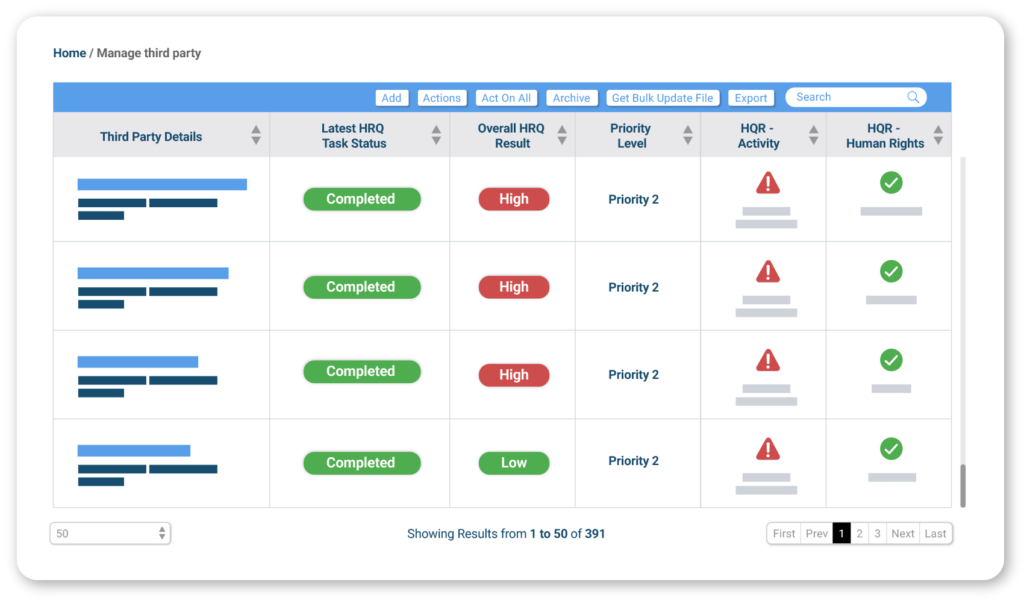
Independent, analyst-led due diligence
Ethixbase360 analysts engage directly with third parties to collect, review, and validate data across ownership, governance, compliance, and regulatory exposure — delivering a structured, defensible report to support onboarding, monitoring, and renewal decisions.Verified ownership transparency
Tcertification requires detailed ownership disclosures and analyst verification, providing clear visibility into who ultimately controls each third party.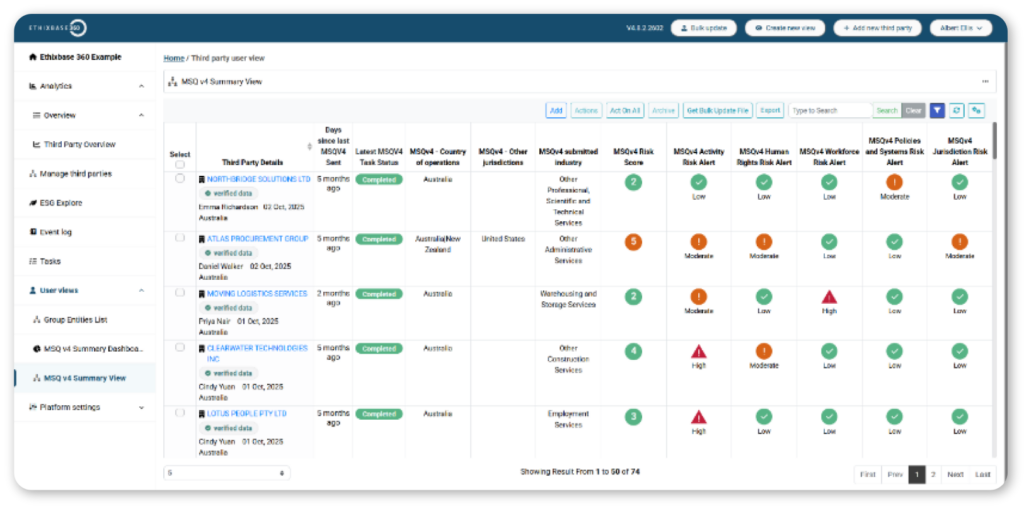
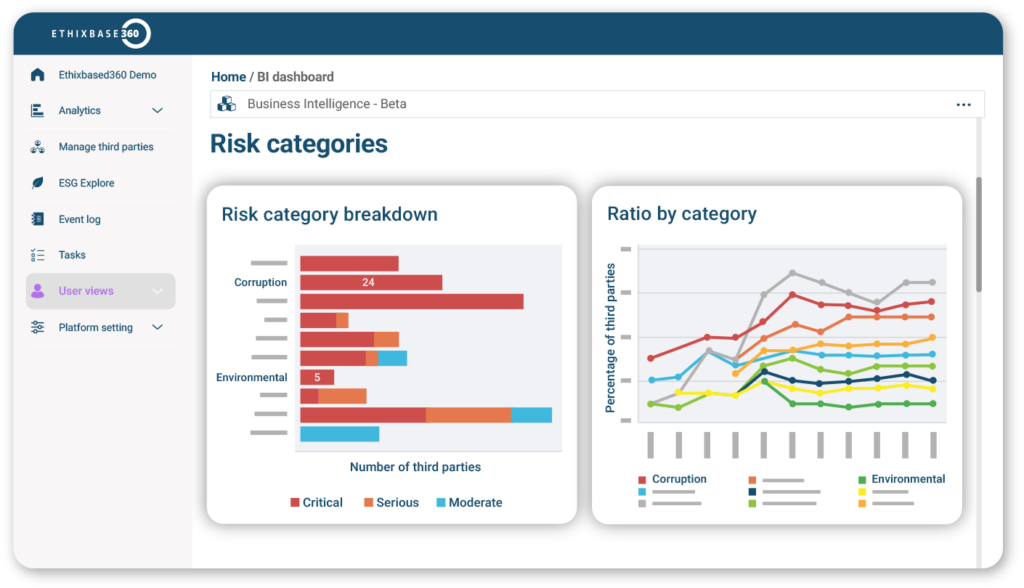
Reduced cost and admin burden
By working directly with the third party, you gain access to a high-quality review while shifting the cost and effort away from internal teams.Access the
Intermediary Directory
Organizations that complete Tcertification may choose to make their reports available through the Ethixbase360 Intermediary Directory, a publicly searchable database of companies that have completed independent due diligence.
This enables multinational companies to quickly identify and review vetted intermediaries when onboarding new partners or expanding into new markets.
Extend Transparency Across All Partners
Not every third party requires the same level of due diligence.
For lower-risk suppliers and supply chain partners, Ethixbase360 offers TRAC, a streamlined transparency profile that enables companies to share essential compliance and ownership information with customers.
Approved organizations receive a TRAC identification number and may be listed in the TRAC Register, allowing companies to quickly verify their due diligence profile.
Trusted by organizations
operating in
highly regulated industries
Reports typically
completed within
2–3 weeks
Continuous
monitoring for
12 months
Frequently Asked Questions
What is Tcertification™ and how is it used by MNCs?
What is Tcertification™ and how is it used by MNCs?
Tcertification™ is a comprehensive, independently conducted due diligence review that enables organizations to access pre-vetted third parties and standardized due diligence reports aligned to international standards.
How does Tcertification™ reduce due diligence costs?
How does Tcertification™ reduce due diligence costs?
How does it help accelerate onboarding?
How does it help accelerate onboarding?
Tcertified reports are available immediately upon third-party consent, enabling faster onboarding and reducing delays associated with traditional due diligence processes.
Where do I access Tcertified third parties?
Where do I access Tcertified third parties?
How does Tcertification™ improve program efficiency?
How does Tcertification™ improve program efficiency?
Third parties complete a standardized, analyst-led review process and update their information annually, allowing compliance teams to focus less on data collection and more on risk analysis and decision-making.
Can Tcertification™ be used alongside existing due diligence processes?
Can Tcertification™ be used alongside existing due diligence processes?
Yes. Organizations can cross-check Tcertification™ reports against internally collected information to validate findings and strengthen their overall risk assessment.
Does Tcertification™ support ongoing monitoring?
Does Tcertification™ support ongoing monitoring?
Yes. Tcertified entities are subject to continuous monitoring, including daily screening against sanctions, enforcement lists, and other risk indicators.
What types of risk are covered in the report?
What types of risk are covered in the report?
Reports include beneficial ownership, sanctions and PEP screening, adverse media, litigation history, financial and corporate data, and confirmation of anti-bribery and human rights policies.