



Identify and address human rights risks across your supply chain
Gain greater visibility of human rights risks in your supply chain through designed assessments that leverage Norton Rose Fulbright’s subject matter input, scalable supplier engagement workflows, and automated data collection to enable legal and regulatory compliance and consistent risk management across global supply chains
Why Human Rights Risk Remains Invisible
Collecting reliable
data takes too long
Internal teams can often spend weeks manually collecting & validating supplier data, often looking at inconsistent data.
Risk intelligence
is scattered
Outdated audits, self-reported supplier statements, and siloed internal records make defensible supplier selection difficult.
Lack of
internal expertise
Internal teams often lack the specialist knowledge to assess and report on human rights risks confidently.
How Human Rights Questionnaire helps
Streamlined supplier data collection
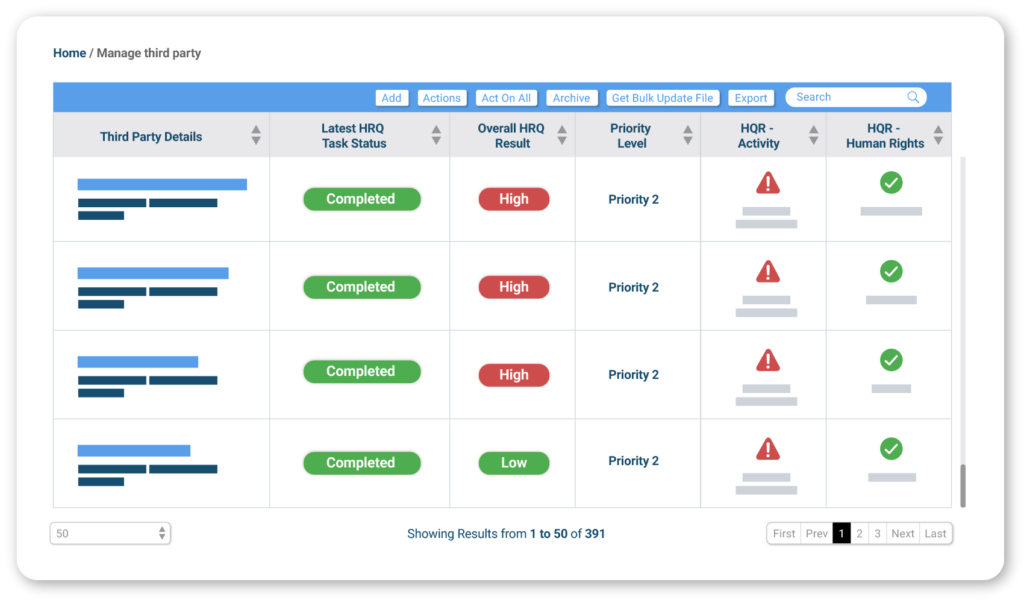
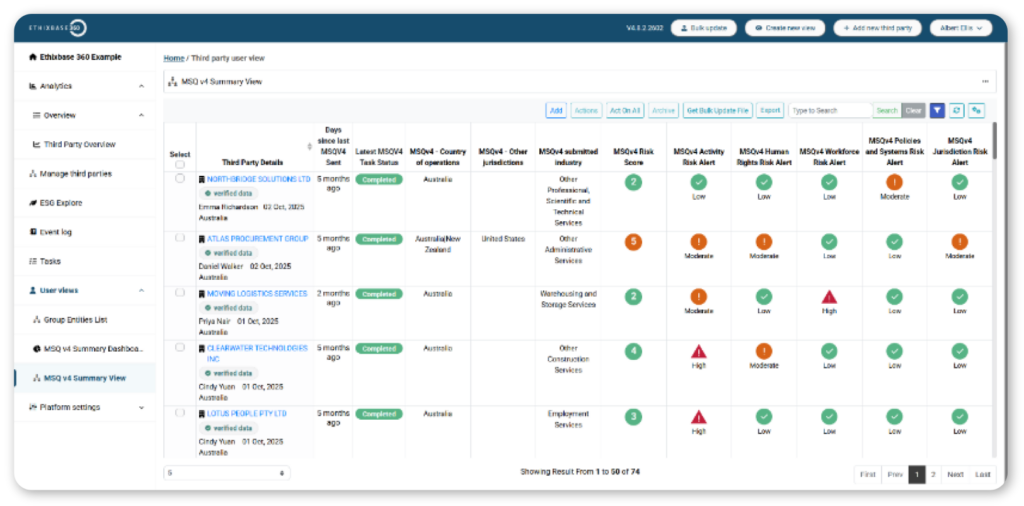
Collect consistent supplier data through structured questionnaires, enabling faster risk identification and mitigation.
Consolidated Risk View
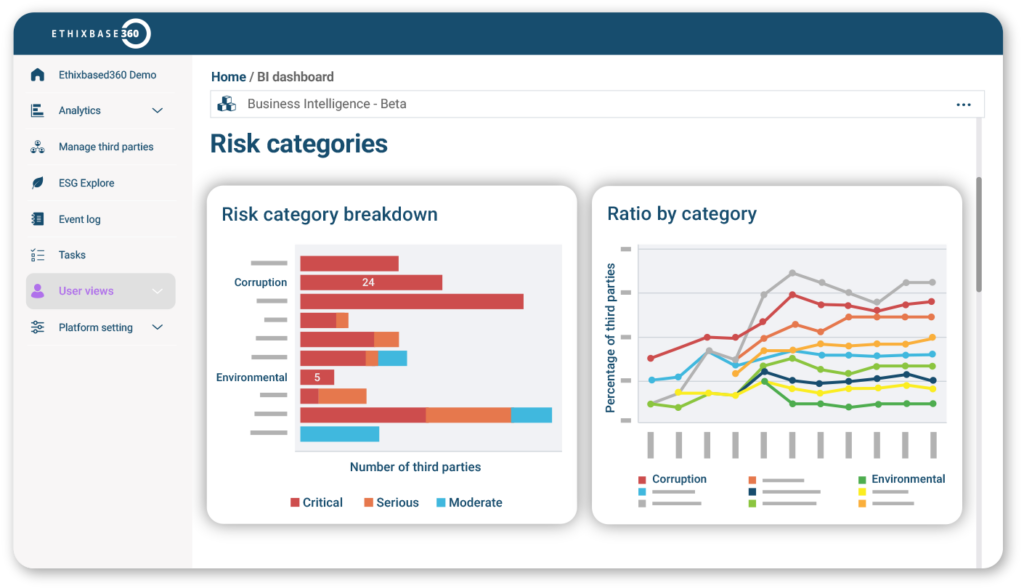
Centralize supplier responses, embed human rights risk scoring, and integrate insights directly into your workflows.
Legal and Regulatory peace of mind
The Human Rights Due Diligence Questionnaire, which appliers know-how developed by Norton Rose Fulbright, supports organizations as they respond to evolving human rights due diligence legislation and regulations.
Key Capabilities

Human rights risk questionnaires
Evaluate worker rights, forced labour, discrimination, and labour practices through structured, standardized assessments.

Continuous monitoring
Human rights risk evolves, we can embed ongoing monitoring to detect emerging supplier issues.

Scale supplier engagement
Automate reminders, track responses, and collect risk data across your supply chain efficiently.

Audit-ready evidence trail
Maintain defensible records of supplier assessments for regulatory reporting, and internal review.
Human Rights Due Diligence FAQs
What does the Human Rights Questionnaire assess?
The Human Rights Questionnaire assesses labour rights, working conditions, and human rights risks across suppliers. It provides structured and comparable outputs.
How is data standardised?
Standardisation is achieved through consistent question sets and scoring logic. This enables reliable comparison across suppliers and regions.
Is it regulation ready?
Yes. The solution supports evolving human rights due diligence requirements.
Can it scale across suppliers?
Yes. Automated workflows allow organisations to engage large supplier populations efficiently.
How are results used?
Results are used to prioritise remediation, escalation, or further due diligence where required.
Resources
Our Latest News, Case Studies, Webinars & More
Insights
From Transparency to Accountability: The UK’s Next Chapter in Modern Slavery and Human Rights Due Diligence
On 4 November 2026, the UK government announced plans to introduce mandatory human rights due diligence for large businesses, alongside new powers to remove goods made with forced labour from the Great Britain market.
Learn MoreReports & Guides
From Disclosure to Enforcement Modern Slavery and Human Rights Regulation in 2026
Modern slavery regulation is shifting from disclosure to enforcement in 2026. 14-jurisdiction eBook covering mandatory due diligence, import bans, civil liability and supply chain traceability, with Norton Rose Fulbright.
Learn MoreOn-Demand Webinars
Best Practices: Identifying and Assessing Human Rights Risk in Your Supply Chain – APAC
Mapping and acting on human rights risk across supply chains is becoming increasingly important for businesses to win and protect their business in today’s market.
Learn More