Path to Supplier Climate Disclosure Readiness
Ensure your suppliers are ready for climate-related disclosures under the new ISSB and AASB frameworks – now adopted across 36 jurisdictions worldwide, including Australia.
The Hardest Part of Climate Reporting Isn’t Your Business — It’s Your Suppliers
Environmental and sustainability reporting standards are evolving rapidly. Globally, organizations are now expected to engage effectively with their value chains to collect credible, comparable emissions data that supports climate-related disclosures under frameworks like ISSB and AASB.
Yet, in practice, supplier engagement remains one of the biggest bottlenecks in climate reporting.
Where Climate Reporting Breaks Down
Supplier engagement is often:
- Slow — manual surveys and email chases delay disclosure timelines.
- Resource-taxing — internal teams could spend weeks validating inconsistent or incomplete data.
- Inconsistent — suppliers vary in climate maturity, readiness, and data quality.
This leaves organizations exposed to:
- Gaps in Scope 3 emissions reporting
- Increased audit and reputational risk
- Missed compliance deadlines and non-compliant disclosures
How We Can Help
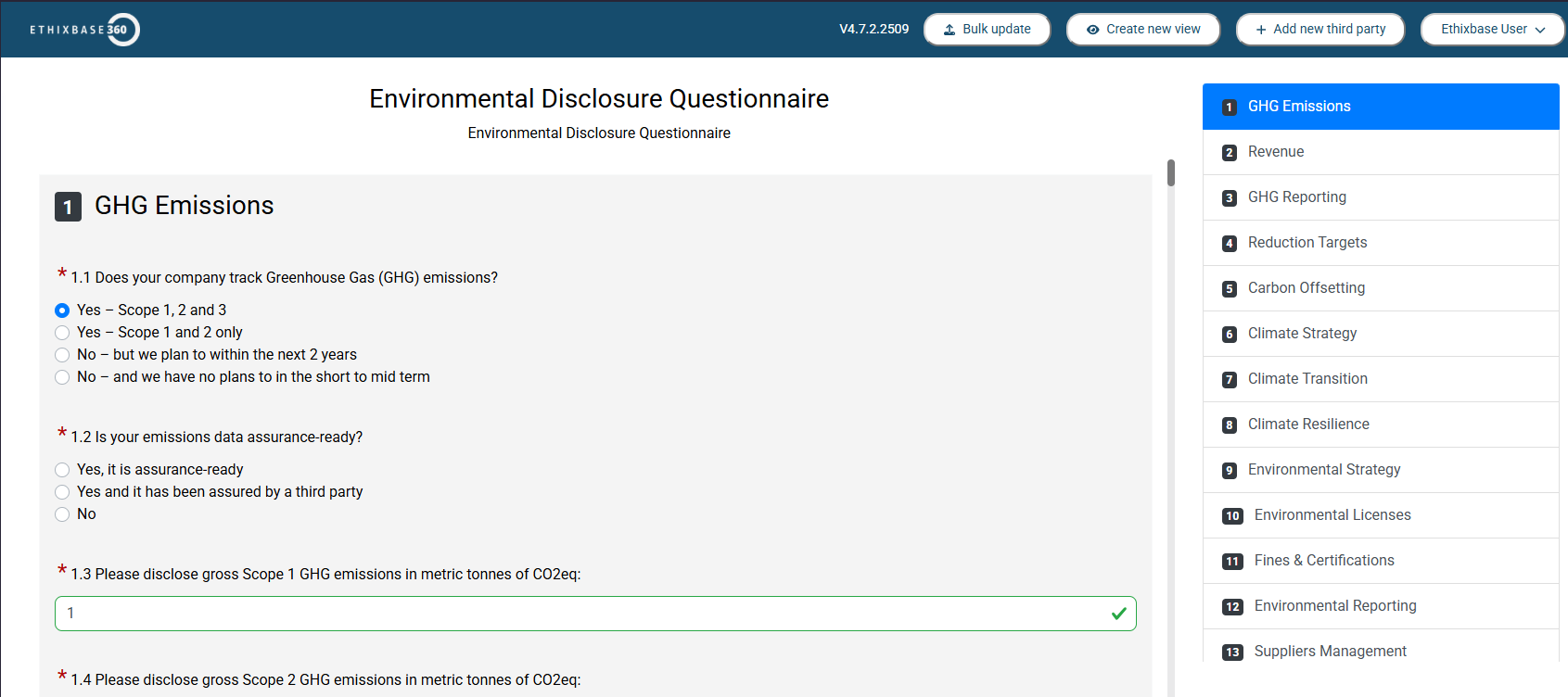
The Ethixbase360 Platform’s Environmental Disclosure Questionnaire brings structure, consistency, and automation to supplier climate disclosures, helping organizations quickly assess maturity and enhance disclosure readiness across their value chain.
Engage suppliers at scale
Engage suppliers at scale with guided, standardized questionnaires, aligned to regulatory requirements.
Identify readiness gaps
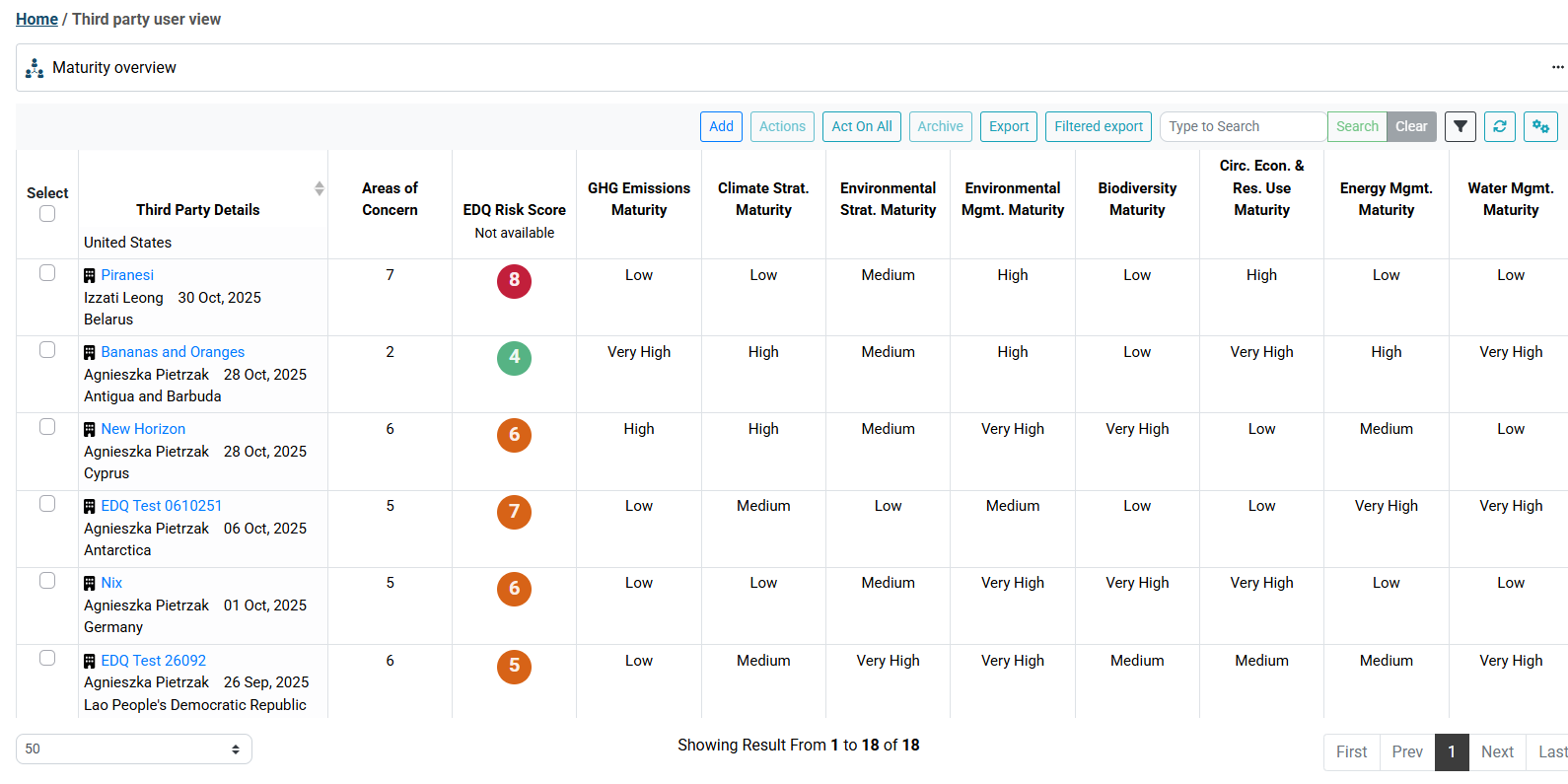
Identify readiness gaps and monitor progress with real-time dashboards.
Automate risk detection
Automate risk detection through built-in triggers for high-risk responses.
Connect climate data
Connect climate data to third-party risk management programs like Cyber, Anti bribery & Corruption, Modern Slavery and ESG.
Benefits
Meet Regulatory Requirements
Confidently align with ISSB frameworks, including AASB, to satisfy mandatory disclosure obligations.
Streamlined Data Collection
Replace spreadsheets and manual chases with structured, conditional questionnaires.
Scalable Adoption
Deploy globally across your supplier base using automation - no extra headcount required.
Executive Visibility
Dashboards provide real-time insights into supplier readiness and risk posture.
Ready to Strengthen Your Climate Reporting Strategy?
Let’s talk about how the Ethixbase360 Environmental Disclosure Questionnaire can help you meet disclosure deadlines, engage suppliers, and build a climate-resilient value chain for years to come
Resources
Our Latest News, Case Studies, Webinars & More

Human Rights Due Diligence in the Asia Pacific Region: The Path From Voluntary to Mandatory
Human rights due diligence (HRDD) is rapidly gaining ground across the Asia Pacific (APAC), as governments have taken steps to […]
The Role of Enhanced Due Diligence in Pharma M&A
Mergers and acquisitions in the life sciences sector can rapidly expand a company’s scientific capabilities, geographic reach, and market access — but[...]
Supply Chain Risk, 10 Years On: Then, Now, and What’s Next
Over the past decade, supply chain and third-party risk management have transformed from procedural compliance exercises into dynamic, intelligence-led disciplines. [...]
Navigating the New BIS Landscape: Why a Risk-Based Approach Matters More Than Ever
The U.S. Department of Commerce’s Bureau of Industry and Security (BIS) has long used the Entity List to restrict exports to organizations and individuals engaged in activities contrary to U.S. [...]
Trade, Tariffs, and Terrorism Webinar Takeaways
Global trade has always been complex but in 2025, the pace and unpredictability of change have reached new heights. From shifting tariff regimes and export controls to new terrorism designations.[...]
The Business Case for Modern Slavery and Human Rights Compliance in Australia
Australia’s Modern Slavery Act 2018 (Cth) requires thousands of companies to report annually on how they identify and manage risks of modern slavery in their operations and supply chains.[...]Due Diligence Questionnaires FAQ's
A due diligence questionnaire (DDQ) is a comprehensive set of questions designed to gather information and assess the potential risks associated with engaging third-party vendors, suppliers, intermediaries, or partners. DDQs are typically used as part of the due diligence process to gather information via direct engagement with third parties to evaluate the suitability, reliability, and compliance before entering into a business relationship, and as required throughout the engagement.
A due diligence questionnaire can cover a broad range of areas depending on what risk the client is looking to assess, their reporting requirements or the information that they require to onboard the third party. This may include but is not limited to, organisational structure, regulatory compliance and controls, integrity practices, operational procedures, quality control, environmental practices, data security measures, insurance coverage, previous litigation or disputes, references, supporting documentation etc. The specific questions should be tailored to the nature of the business relationship and the industry involved.
Due diligence questionnaires streamline the due diligence process by providing a structured approach to gathering and reporting on information. They help standardise the evaluation process, ensure consistent data collection, enable efficient comparison between potential vendors or partners, provide a basis for risk assessment and decision-making and where relevant (such as in the case of Modern Slavery reporting requirements) facilitate mandated annual reporting on supply chain risk assessment.
Yes, due diligence questionnaires can be customised based on the specific requirements of risk area, regulation or organization. It’s important to tailor the questions to address the specific risks and compliance needs relevant to the business, ensuring the questionnaire captures the necessary information to make informed decisions.
Ethixbase360 has a number of modules that assist in remaining compliant such as: