 Skip to content
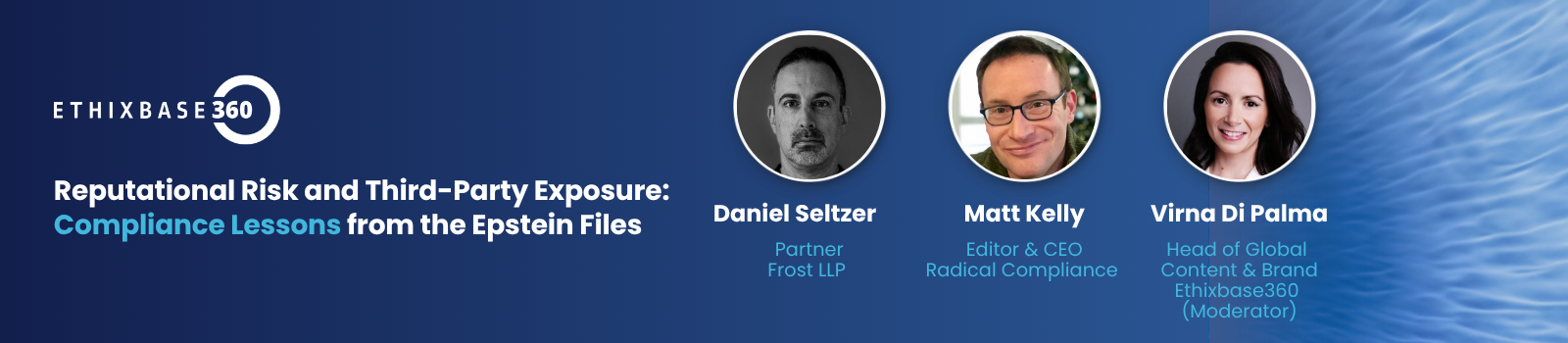
Recent disclosures linked to the Epstein case have reignited public scrutiny around reputational risk, third-party relationships, and the hidden vulnerabilities that sit beyond formal contracts.
While the case itself is not a traditional compliance matter, it offers powerful lessons for organizations managing complex third-party ecosystems. Associations — whether direct, indirect, historic, or informal — can surface years later, triggering regulatory inquiry, media attention, stakeholder concern, and significant brand damage.
In today’s enforcement and transparency environment, organizations are increasingly judged not only by what they knew, but by what they should have identified.
This session will explore what compliance and risk leaders can learn from high-profile reputational crises, including:
- How third-party associations create reputational exposure — even without operational misconduct
- The evolving expectations around beneficial ownership transparency and network mapping
- Why traditional onboarding due diligence may fail to detect latent reputational risks
- The role of continuous monitoring in identifying emerging red flags
- Governance considerations when senior executives or board members have high-risk external affiliations
- Practical strategies for building defensible, risk-based third-party oversight frameworks
Designed for compliance and third-party risk management professionals, this discussion will move beyond headlines to focus on the structural risk management lessons organizations can draw from high-profile reputational events.
Speakers:
- Dan Seltzer, Partner, Frost LLP
- Matt Kelly, Editor & CEO, Radical Compliance
- Virna Di Palma, Head of Global Content & Brand, Ethixbase360 – Moderator